In my last post I said the decision to leave was the hard part. That was true. But once I had decided, a second question arrived that took almost as long to answer. Not whether to go. Where.
I want to walk through that properly, because most people make this decision on an agent's advice or a cousin's recommendation, and I made it on a spreadsheet and an instinct, and the instinct turned out to matter more than the spreadsheet.
First the country, then the university
I did the country comparison before I looked at a single university. Canada, the UK, the US, Germany, Ireland. I sat with each one for a while.
The US ruled itself out on cost. The fees were high enough that the maths stopped working before I got to anything else.
Germany was tempting on paper, because the cost is low and the engineering reputation is real. But most of what I wanted required German, and adding a language to everything else I was taking on felt like one bet too many.
The UK was the one I looked at longest, because it is where most people from my position go. What I saw in early 2024 was a market that felt like it was softening, and a lot of uncertainty about what the graduate route would actually be worth by the time I finished. I did not want to spend a year and a large amount of money and arrive into a market that had moved under me. Some of that has since played out the way I feared, though I want to be careful here: that was my read at the time, not a prediction I can claim credit for.
Then I looked at Ireland, and a few things lined up at once.
It is English speaking, which after the Germany question mattered more than it sounds. A lot of the companies I would want to work for have their European headquarters here, which meant the jobs I was training toward actually existed in the country I was moving to. And the degree was one year, the same as everywhere except home. In India a master's is two years. Every other option on my list gave me that year back, and when you are five years into a career, a year is not a small thing to be handed.
My brother Piyush spent this whole period pushing me toward Canada. His friends were there, he trusted it, and he made the case hard. I did the research anyway, and my results kept coming out different from his advice. In the end I went with what I had found rather than what I had been told, which is not an easy thing to do when the person telling you is your elder brother and the only one in the family who had any view at all. But the numbers were the numbers.
Ireland it was.
The four offers
Then the universities, and here I had more choice than I expected.
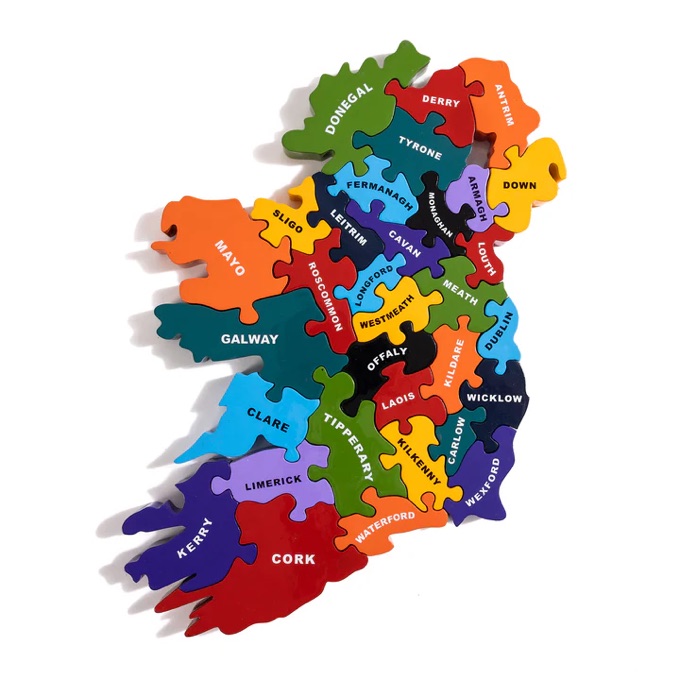
The first offer came from University College Cork. Then University College Dublin, though that one was for Information Systems rather than the analytics course I actually wanted. Then University of Galway, in Business Analytics, which was exactly the course I had in mind.
The fees told their own story. UCD sat around €21,000. Cork was also €21,000, though they offered roughly €2,000 in scholarship, which brought it to about €19,000. Galway was €18,000, and it was the course I actually wanted, in the city with the lowest cost of living of the three. The cheapest option was also the right one, which does not happen often enough to ignore when it does.
So the real comparison came down to three cities: Cork, Dublin, Galway. And when I looked closely, the thing that surprised me was how little separated the courses themselves. The modules were nearly identical across all three. Same subjects, same structure, same tools. If the education was going to be the same wherever I went, then the decision was not really about the degree at all. It was about the year of my life around the degree.
That reframed everything.
Dublin was the obvious name and the obvious problem. The fees were higher, the living costs were higher, and the accommodation situation was worse than high, it was scarce. Paying more to be more likely to struggle for a room did not make sense.
Cork I found harder to read. The fee after scholarship was competitive, but everything I could gather pointed to it being less set up for students than the other two.
Galway kept coming out as the safe one. The lowest fee, the lowest cost of living, the same course, and the city where the maths on rent and actually finding somewhere to sleep all pointed the same direction. My research and my gut agreed, which does not always happen, and when it does you should probably listen.
I chose Galway.
The offer that came too late
There is a twist to this, and I only found out after I had landed.
I had also applied to Trinity College Dublin. For a long time I heard nothing, so I moved on, paid my Galway fees, booked my flights, and arrived. And then, after I was already here, a letter came from Trinity. I had been on their waiting list, and they were now offering me a place.
By then it was far too late. The fees were paid, the decision was made, I was standing in Galway.
I think about that letter sometimes, but not with regret. If anything it confirmed something. Everything I had researched, every quiet calculation I had made months earlier in Bhopal, had pointed me here, and by the time the alternative arrived I was already living inside the answer. It felt less like a missed opportunity and more like proof that the instinct had been right all along.

On trusting the research
People kept asking if I was worried. Worried about accommodation, about the cost, about landing in a place where I knew no one, about all the things that could go wrong.
The honest answer is that I was not, and the reason is not bravery. It is that I had done the work. I had researched this decision to the point where I trusted it more than I trusted my own nerves. Whatever came, accommodation, money, the ordinary difficulty of starting a life from zero in a new country, I had decided I would meet it when it arrived rather than fear it in advance.
That is more or less how it has gone. On instinct, backed by research, one problem at a time. It is still how it is going now.
The next post is about what actually happened when I landed. The first 24 hours, and the first ten days, which did not go quite the way the spreadsheet imagined.